
Birth of a Model Builder
Part One — The Apache, the Workbench, and a Father Who Watched
A FOUR-PART SERIES · PART ONE OF FOUR
Last time, an eight-year-old learned to throw his first strike, and I promised the next story would take us to a boy’s workbench and a plastic helicopter that became the spine of an adult life. Welcome back. Pull up the chair.
There is something almost mythological about turning ten years old when you are ten years old.
It is not merely a birthday. It is a threshold — a crossing over. You are no longer a single-digit child subject to the indignities of being called little. You are, by the irrefutable mathematics of the calendar, officially a double-digit human being. A grown-up. A force to be reckoned with.
At least, that is what I told myself on the morning of my tenth birthday. And I was completely certain of it.
Of all the birthdays from my early years, this one stands apart in my memory with unusual clarity. Not just because of the milestone, though that was enough. But because of the gift.
Sitting among the wrapping paper and cake plates and the general cheerful chaos of a ten-year-old’s birthday party was a box unlike anything I had unwrapped before. Not a snap-together toy. Not a pre-painted set designed for younger hands and shorter attention spans. This was a 100 percent authentic, glue-everything-together, read-the-instructions-or-suffer-the-consequences real model kit.
An AH-64 Apache U.S. Army attack helicopter.
When I opened the box, the olive drab plastic pieces — each one still perfectly attached to its support frame, pristine and waiting — seemed to call my name. I am not being dramatic when I tell you that I genuinely felt summoned by those parts. They were begging to be separated from their frames, assembled according to detailed instructions, painted with the meticulous care of someone who takes their helicopters very seriously.
I was ten. I took my helicopters very seriously.
My parents, bless them, successfully kept me engaged in the birthday party long enough to be socially acceptable about the whole thing — cake, games, guests, the full production. But the entire time, some part of my mind was already at the workbench with that box.
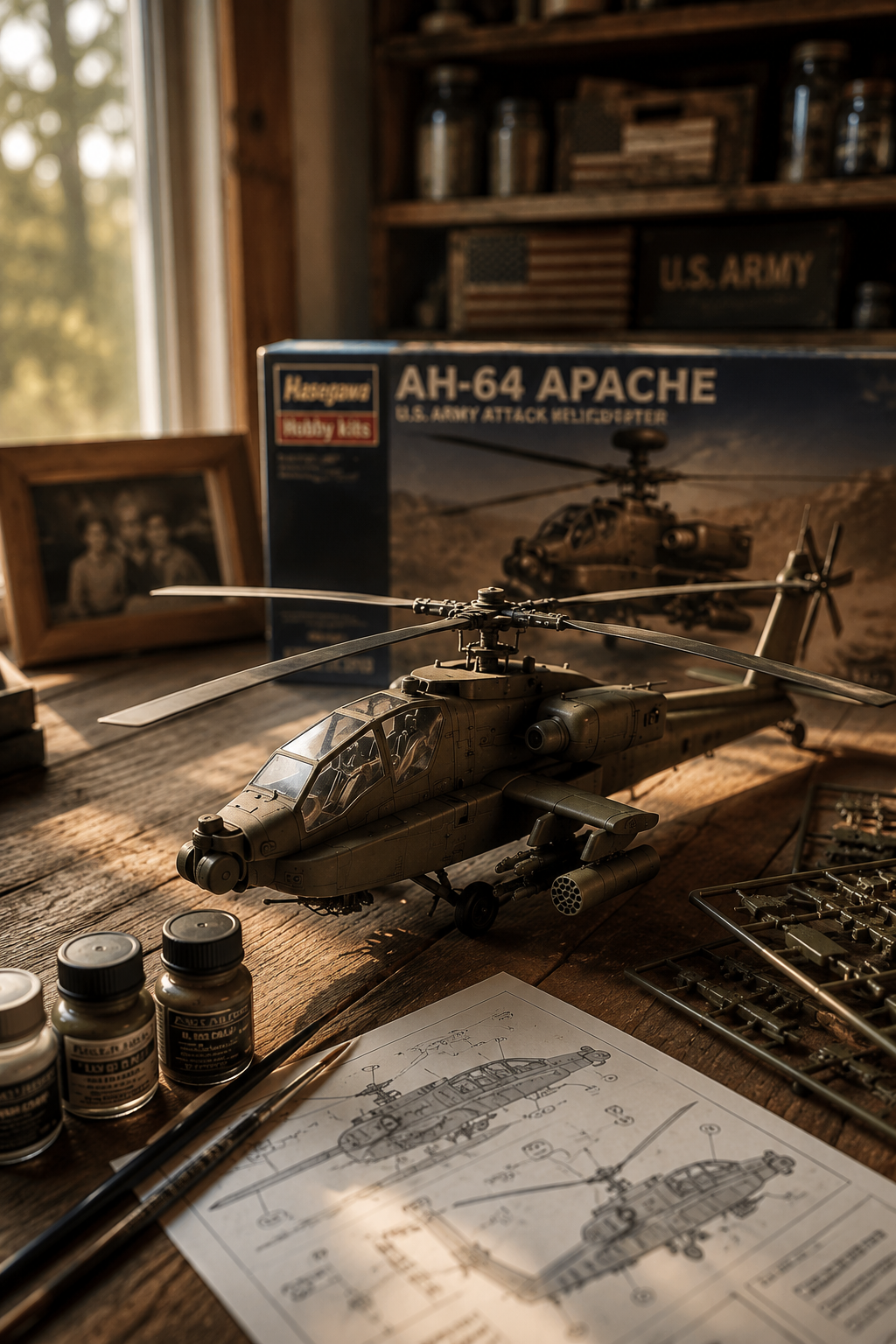
The Assembly Begins
Over the next several weeks, I spent anywhere from minutes to hours each day meticulously separating pieces from their frames, applying glue with the concentration of a surgeon, and carefully selecting the right paint colors for each component. As close to the real thing as a ten-year-old with hobby paint and a steady-enough hand could manage.
My dad would check in from time to time. He’d lean over, survey the operation, ask if I needed any help. And here is the detail I did not fully appreciate until I was grown: at no point during the entire build did he offer advice I had not asked for. At no point did he reach over and take the pieces from my hands. He watched. He was present. He trusted the process — and more importantly, he trusted me.
When I finally set the completed helicopter on the shelf, it was not a museum-quality piece. A trained eye would have spotted the slightly uneven paint on the tail rotor, the glue residue near the cockpit canopy. But it was mine. Every hour of work was visible in it. And I had built it.
“The build is never just about the model. It is always about the builder.”
That Apache was the first of fifteen plastic models I would build over the next six years. Each one more challenging than the last — not because I could not find easier kits, but because I kept deliberately choosing harder ones. And in doing so, I built something alongside every model: a version of myself that knew how to work through difficulty toward something worth finishing.
From the Workbench to the Life Table
I wrote the original version of this story during COVID — a season when millions of us found ourselves at an unexpected standstill, sitting with more time and fewer distractions than we had experienced in years. Something about that enforced stillness sent me back to that workbench. Back to the kid with the helicopter. Back to lessons I had filed away and never fully unpacked.
What I found, when I sat with those lessons as an adult in his mid-forties, was that they were not really about model building at all. They were about identity — the ongoing, never-quite-finished work of becoming the person you were made to be.
Before I go further, we need to establish the foundation. Because without it, everything that follows is just self-improvement content dressed up in spiritual language.
The foundation is this: your identity is not constructed. It is received.
Before I formed you in the womb I knew you, before you were born I set you apart.
— Jeremiah 1:5
This was not a word spoken to a celebrity prophet. This was a word to someone who would spend most of his ministry feeling inadequate, overlooked, and deeply unsure of himself. God’s response to that inadequacy was not a performance review. It was a declaration of prior knowledge and prior purpose.
You were known before you were built. The model was designed before the box was opened.
NEXT TIME · PART TWO
If your identity is received before it is constructed, where does the construction actually happen? Next week we open the toolbox: three domains where the Relational self gets built — Love, Family, and Work. We’ll start with Love, and a father standing very quietly at the edge of a workbench.
Sit this week with the verse from Jeremiah. You were known before you were built. Let that settle in before we pick up the next tool. See you next week.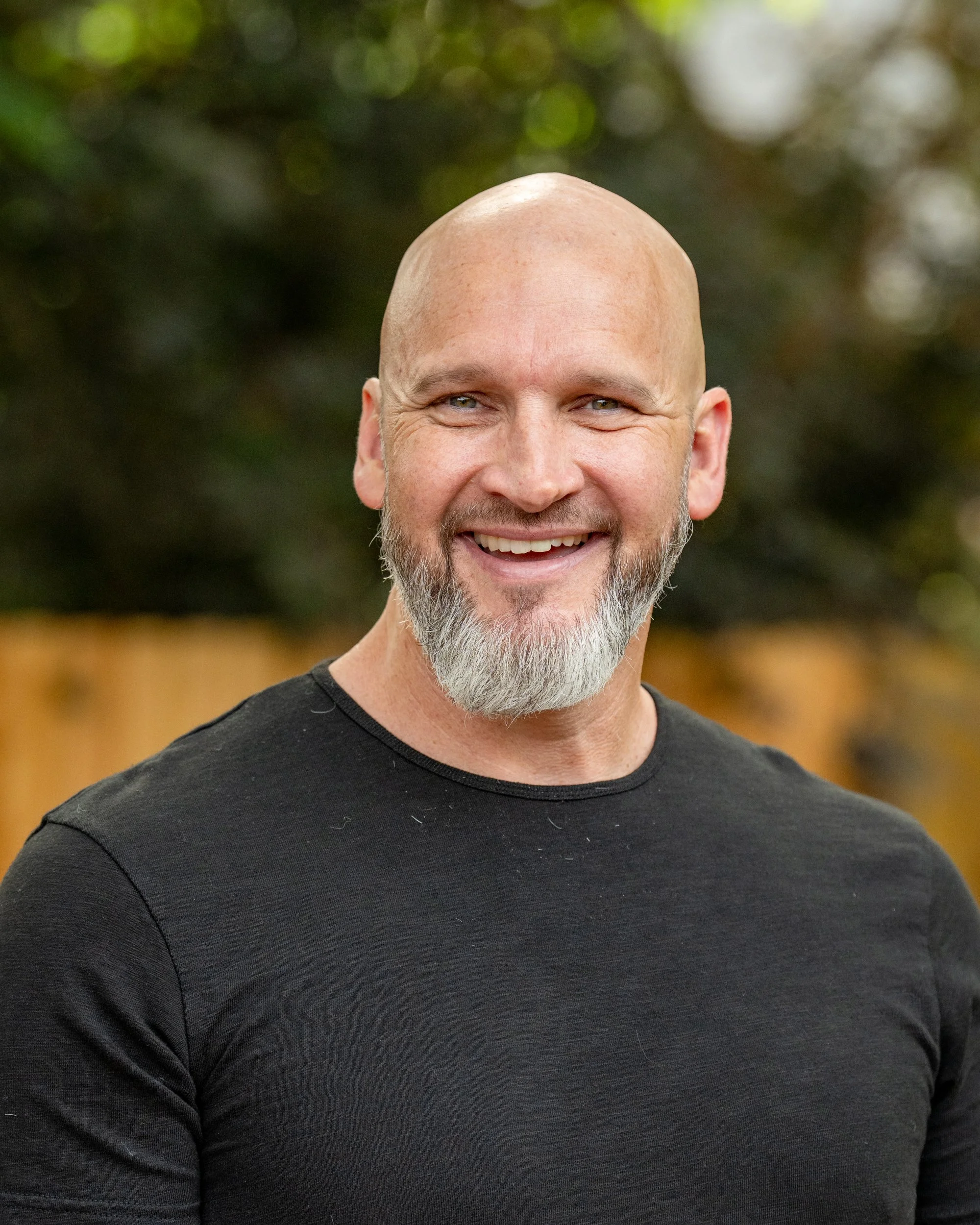
ABOUT THE AUTHOR
Life, Leadership, Legacy & Marriage Coach · 30+ Years of Leadership Experience
Nate Parsons is a life, leadership, legacy, and marriage coach and mentor with over 30 years of leadership experience spanning military, ministry, business, and personal development. He and his wife Noemi are the founders of S3 Leadership Solutions and On-Fire Marriage, dedicated to helping people across every life stage discover and fulfill their God-given purpose.
