
The Beloved Self
Part Two — Love and the First Domain of the Relational Three
A FOUR-PART SERIES · PART TWO OF FOUR
Last week, a ten-year-old opened an Apache helicopter kit and a father stood very quietly at the edge of a workbench. We landed on this: you were known before you were built. Now we look at where the build actually happens.
Erik Erikson, the developmental psychologist whose work on identity formation has shaped how clinicians and educators understand human development for seven decades, identified what he called “identity achievement” — the state of a person who has moved through the pressures and possibilities of their life and arrived at a settled, secure sense of who they are. The people who reach this place are not those who never struggled. They are those who struggled and found their footing. Crucially, Erikson observed that identity is never finally resolved — it is continuously renegotiated as a person moves through the stages of life.
Which is to say: this work is never done. And that is not a problem to be solved. That is the invitation.

Three Domains of Identity
Our lives organize themselves around a number of primary domains. The ancient traditions called them by different names. Modern psychology has mapped them with clinical precision. Scripture addresses them with remarkable directness. The three we will unpack here are Love, Family, and Work — and the person who understands their identity across all three will live with a coherence and a purpose that most people only glimpse from a distance.
We will take Love this week, and the other two when we meet again.
Love · The Identity of the Beloved Self
The domain of love is where our identity is most tested and most revealed. It is not primarily the romantic domain, though it includes that. It is the domain of relational identity — who are you in your closest attachments? Are you someone who is known? Are you someone who allows yourself to be known?
My father standing at the edge of that workbench — watching without intervening, asking without demanding, trusting without abandoning — is one of my earliest pictures of what love looks like in practice. Not sentimental. Not effusive. Present, patient, and profoundly respectful of my personhood.
The attachment theorist John Bowlby identified what he called the “secure base” — the relational foundation from which a person can venture into difficulty and to which they can return when the difficulty becomes overwhelming. Children with a secure base explore more boldly, recover from setbacks more quickly, and develop a more stable sense of self over time. My father was my secure base at that workbench. He did not hover. He did not rescue. He was simply there — present, interested, trusting. And from that base, I was free to do the hard work of building something I had never built before.
We love because He first loved us.
— 1 John 4:19
The capacity to love — to actually be present, to give yourself to another person without losing yourself in the process — flows from a prior experience of being loved. Identity in the domain of love begins not with what you give but with what you have first received. The person who does not know they are loved will spend their whole life trying to earn what has already been given.
EARLY YEARS: Stop auditioning. Learn to receive love without performing for it. You were cast in this story before you were born.
BUILDING YEARS: Are you letting yourself be known in your closest relationship, or are you managing the impression your partner has of you? There is a version of a “good partner” who is, quietly, a very lonely person.
PEAK YEARS: Your capacity to give is not a finite resource to be rationed. It is renewable — replenished by continued connection to the One who loved you first.
LEGACY YEARS: The question shifts from “Am I loved?” to “Have I loved well?” Those who finish well in this domain are surrounded not by trophies, but by people.
NEXT TIME · PART THREE
If Love is where the build begins, Family is where the build is handed forward, and Work is where the build meets the world. Next week we walk both of those domains — and a father’s restraint at the edge of a workbench will turn out to mean even more than it did this week.
Sit this week with the simplest sentence in the chapter: we love because He first loved us. Receive it before you try to give it. I’ll see you next week.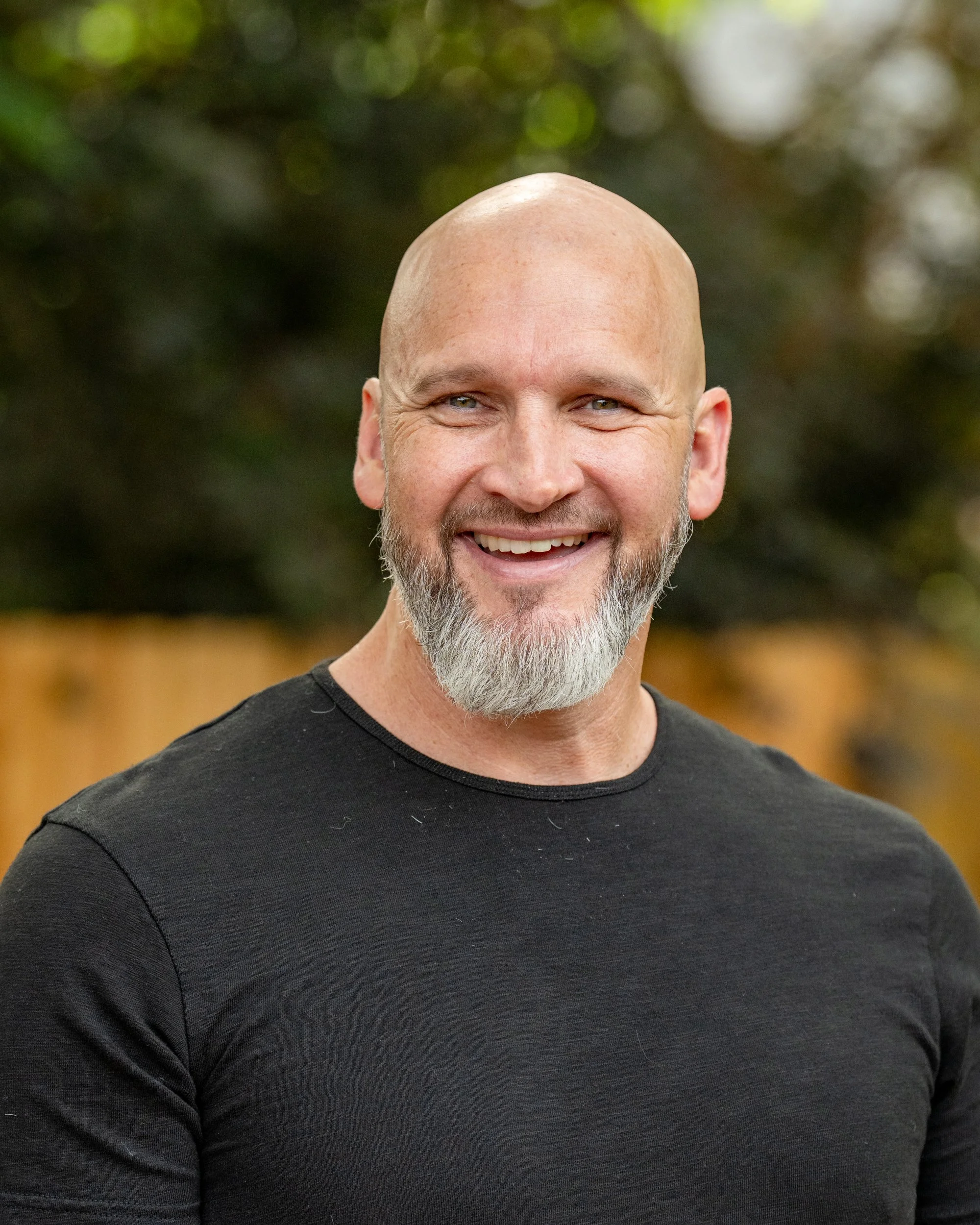
ABOUT THE AUTHOR
Life, Leadership, Legacy & Marriage Coach · 30+ Years of Leadership Experience
Nate Parsons is a life, leadership, legacy, and marriage coach and mentor with over 30 years of leadership experience spanning military, ministry, business, and personal development. He and his wife Noemi are the founders of S3 Leadership Solutions and On-Fire Marriage, dedicated to helping people across every life stage discover and fulfill their God-given purpose.
