
Crossing the Language Barrier
Part One — Seventeen Weeks in the Desert
A FOUR-PART SERIES · PART ONE OF FOUR
Last time, I told you the next story would take us across a language barrier nobody could see around — to a kitchen in the Iraqi desert and what a young soldier learned there about the Outer Three. Welcome back. Pour the coffee. Here is where it gets hot.
In the year I turned 30, I found myself “enjoying” the sun and sand of the Middle East.
Compliments of the U.S. Army, I was serving as an integral part of an advisory team to the soldiers of the Iraqi Army as their lead medical advisor. During the first few months of my one-year tour, I was responsible for training twelve Iraqi soldiers to run a dining facility serving over 500 Iraqi soldiers, three meals a day.
Let me paint the picture clearly. I was thirty years old, standing in the desert, responsible for feeding five hundred soldiers, working alongside a dozen men who spoke no English — while I spoke exactly zero words of Arabic. Not “hello.” Not “please.” Not “do not put that there.” Zero. We were starting from absolute scratch.

A Bond Built Without Words
During the first few weeks of on-the-job training, I had no interpreter. They did not speak English and I did not speak Arabic. While the first day or two — okay, fine, the first week or two — was genuinely stressful, something unexpected happened. It did not take long before I actually started to look forward to the time I spent with these soldiers.
Hours upon hours each day, side by side in the heat, we developed our own ways of communicating in spite of the language barrier that stood between us. Gestures. Facial expressions. Demonstrations. The universal language of someone pointing at a pot and then at a giant serving spoon and then at the clock on the wall. It was clunky at first. Then it became second nature. Then it became something I can only describe as beautiful.
We were becoming a brotherhood. A bond born out of adversity and necessity — because failure was not an option. Five hundred soldiers needed to eat. So collectively, creatively, stubbornly, we found ways to make it work.
“Failure was not an option. So we found another way. And in finding it, we found each other.”
I did this for sixteen to nineteen hours a day, seven days a week, for seventeen weeks straight. No day off. Not one. If you are doing the math at home, that is nearly four months of unbroken daily labor in the desert, with people who spoke a different language, in a country that was not mine, far from everyone and everything familiar.
You might be wondering what in the world kept me going. I can tell you that at the time, I did not fully recognize what it was either. I just had to. It was my duty. It was my responsibility. It was the mission.
It was not until years later — sitting still long enough to actually reflect — that I understood what had really happened out there. What I found, when I finally sat with the question, was something far deeper than professionalism or military obligation. It was LOVE. The love I had for my brothers-in-arms. A deeply held commitment to their mission and mine. And the daily, almost primal challenge of crossing not just a language barrier, but a cultural barrier, a religious barrier, and a socioeconomic barrier as well.
We crossed all of them. Together. Every day. Because there was no other choice — and because on the other side of every barrier we crossed, there was a human being worth knowing.
What the Desert Has to Do With Your Life Right Now
So why would I share this story with you here, in a reflection on identity and purpose? Because it occurred to me, as it did when I first wrote about it during COVID, that so many of us have our own barriers to overcome — barriers that feel just as total and just as isolating as standing in a foreign desert without a common language.
You may not be in Iraq. But you may be in a season where the old maps no longer apply. Where the ways you used to navigate — financially, relationally, professionally — are no longer working. Where the environment has shifted and you are being asked to figure out a new way of communicating, a new way of providing, a new way of showing up, without a clear instruction manual.
And like me, those many years ago, failure is not an option.
You must push through. You must not quit. You must find new ways to work, live, communicate, and relate. And because you have been, and because you are still digging deep to find your “why” for this day, for this moment — you are growing stronger. You are forging new bonds that did not exist before the hardship. You are becoming something more than you were.
But I want to do more than encourage you. I want to give you a framework for understanding what is actually happening in you during seasons like this — because I believe the people who understand their own formation are the ones who navigate it best.
The Foundation: Identity Received, Not Constructed
Before we enter each domain, we need to establish the ground we are standing on — because without a foundation, everything that follows is just motivational content with good production values.
The foundation is this: your identity is not constructed by what you produce, survive, or accumulate. It is received. It was spoken over you before you spoke a single word of any language.
For we are God’s handiwork, created in Christ Jesus to do good works, which God prepared in advance for us to do.
— Ephesians 2:10
If that verse sounds familiar, it should — it is the same poiema verse we started this whole conversation on, in the very first piece I wrote here. The Greek word translated “handiwork” is poiema, the same root from which we get the word “poem.” You are not a project to be completed. You are not a problem to be solved. You are a work of intentional, artful, purposeful creation — and the Author already knows how the poem ends.
In seventeen weeks in the desert, I was being formed in exactly that way. I did not know it then. I know it now. And I want to help you see it in your own life — in three domains most of us navigate by instinct but rarely examine with intention.
NEXT WEEK · PART TWO
If the Inner Three are where identity is rooted, and the Relational Three are where it is exchanged, the Outer Three are where it meets the world. Next week we start with the most disorienting one: Money. The desert had its own answer to that question — and so does Hebrews 13.
Sit this week with the verse. You were authored on purpose, before any of this. Let it settle in. I’ll see you next week.
ABOUT THE AUTHOR
Life, Leadership, Legacy & Marriage Coach · 30+ Years of Leadership Experience
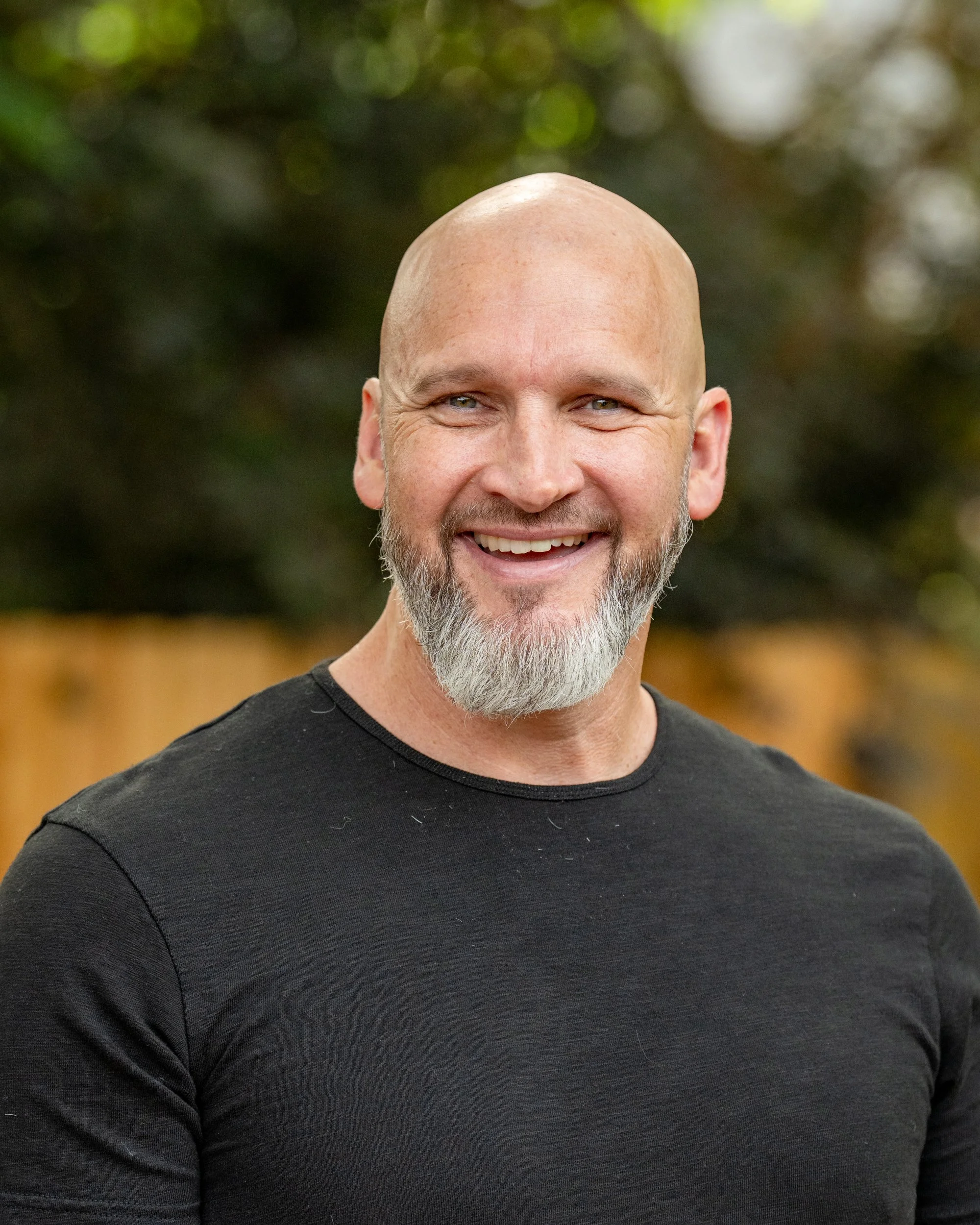
Nate Parsons is a life, leadership, legacy, and marriage coach and mentor with over 30 years of leadership experience spanning military, ministry, business, and personal development. He and his wife Noemi are the founders of S3 Leadership Solutions and On-Fire Marriage, dedicated to helping people across every life stage discover and fulfill their God-given purpose.
