
The Belonging Self and the Fully Human Self
Part Three — Community, Hobbies, and the Domains We Pretend Are Optional
A FOUR-PART SERIES · PART THREE OF FOUR
Last week we looked at the first of the Outer Three — money, and the open hand. This week, the two domains most people quietly treat as optional and most regret treating that way: the people we belong to, and the things we do simply because we are alive.
2. Community: · The Identity of the Belonging Self
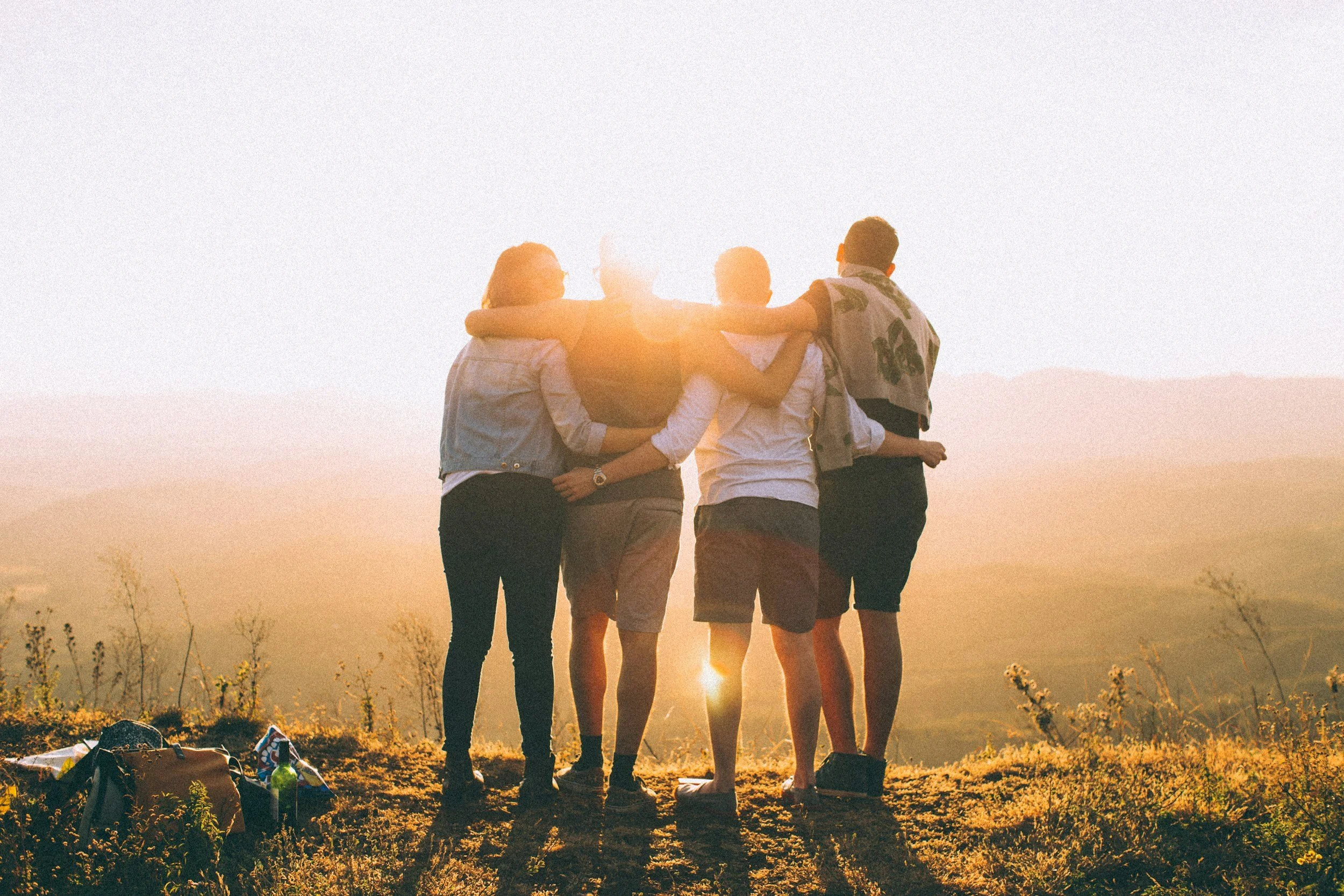
There is no version of that desert story in which I survive seventeen weeks alone. Not physically, not emotionally, not spiritually. The twelve men I worked with were not just colleagues. They were not just subordinates in a loosely held chain of command. They were — without any formal declaration, without any ceremony, without even a shared language — my people.
I have thought about this many times since. How does that kind of bond happen across barriers that large? Different language. Different religion. Different culture. Different country. Different everything. And yet — a brotherhood. Real, warm, specific, and lasting in the memory even now, decades later.
The answer, I think, is simpler and more profound than we usually admit: it happens through shared mission, shared struggle, and shared presence over time. Take away any one of those three ingredients and you get something less than belonging. Put all three together and you get something that walls and languages and borders cannot stop.
Two are better than one, because they have a good return for their labor: if either of them falls down, one can help the other up. But pity anyone who falls and has no one to help them up.
— Ecclesiastes 4:9–10
The research on adult loneliness in the modern world is, frankly, alarming. Studies consistently show that adults in the developed world are experiencing a friendship crisis of historic proportions — with a significant percentage of adults reporting that they have no close friends at all, and a larger percentage reporting that they have no one they would turn to in a genuine crisis. This is not a spiritual failing. It is a structural one. The conditions that used to generate community organically — shared physical labor, proximity, necessity — have been largely engineered out of modern life.
Which means that community, for the modern person, is no longer something that just happens. It is something that must be chosen. Pursued. Built. Deliberately and at some cost.
The sociologist Robert Putnam, in his landmark work on social capital, documented the measurable decline of community bonds in American life over the last half-century — and the measurable costs of that decline in health, happiness, civic participation, and what he called the “fabric of trust” that holds societies together. His conclusion was sobering: we are paying an enormous price for the individualism we have chosen, often without knowing we chose it.
The person who knows who they are understands that they were not made for isolation. We were made for the table. We were made for the trench. I was made, it turns out, for the desert kitchen with twelve people and no common language — because something in that arrangement, in the necessity and the proximity and the shared purpose, drew out of me a version of myself that comfort and solitude never could.
“You cannot become the fullest version of yourself alone. You need the friction, the witness, and the warmth of other people.”
EARLY YEARS: The community work of this stage is learning to choose your people deliberately — not just proximity friends, but the ones who call you toward who you are becoming, not just who you have been.
BUILDING YEARS: The busyness of building — career, marriage, family — is the primary enemy of community in this stage. The person who lets their friendships atrophy in their thirties and forties will pay for it in their fifties and sixties in ways they did not anticipate.
PEAK YEARS: At this stage you begin to understand that community is not just something you receive — it is something you generate. You become the initiator, the convener, the one who calls the dinner together and holds the space.
LEGACY YEARS: Your community in this stage becomes your living legacy. The people who gather around you are not just friends — they are the evidence of a life that was turned outward. Their flourishing is your inheritance.

3. Hobbies: · The Identity of the Fully Human Self
This may be the domain that surprises you most in a conversation about identity. Money and community — sure, those feel weighty enough to deserve theological and psychological attention. But hobbies? That sounds like the section where we talk about golf handicaps and fishing licenses and people who build birdhouses in their garages on Saturday mornings.
Bear with me. Because I think this is one of the most under-examined and quietly consequential domains in anyone’s life — and I think the desert helped me understand why.
In seventeen weeks of sixteen-hour days, there was almost no margin for anything that was not the mission. And in the absence of that margin, something in me began to quietly atrophy. Not my professional competence. Not my physical endurance. Something else. Something harder to name — a kind of interior aliveness, a capacity for delight, a connection to the parts of myself that existed apart from my function.
When I came home, one of the first things I did was find my way back to the things I loved simply because I loved them. Not because they were productive. Not because they built a skill I could deploy. But because they were mine. Because they made me feel like a whole person rather than a function.
He makes me lie down in green pastures, he leads me beside quiet waters, he refreshes my soul.
— Psalm 23:2–3
Notice the verbs. He makes. He leads. He refreshes. Rest, restoration, the renewal of the interior life — these are not concessions to human weakness in the biblical framework. They are acts of divine shepherding. The God who designed the Sabbath did not do so because He needed a day off. He did so because He knew that the creatures He made require regular renewal of something that work alone cannot supply.
The psychologist Mihaly Csikszentmihalyi spent decades studying what he called “flow” — that state of deep, absorbing engagement that occurs when a person is fully invested in a meaningful activity. His research found that flow is one of the most reliable sources of what he called “psychological wellbeing” — not happiness in a shallow sense, but a deep sense of aliveness, meaning, and coherence. And critically, flow is not limited to professional activity. It occurs in hobbies, in creative pursuits, in physical challenges, in any domain where a person is fully present and fully engaged.
A life with no hobbies is a life that has, probably without realizing it, agreed to be nothing more than its function. And the person who is nothing more than their function is the most fragile kind of person there is — because the moment the function is threatened, the entire identity collapses.
The person who builds birdhouses on Saturday mornings is not wasting time. They are maintaining a relationship with a version of themselves that cannot be hired, promoted, fired, or laid off. They are keeping alive the part of them that is made in the image of a God who creates not only out of necessity but out of sheer, exuberant, overflowing creative joy.
“A life with no hobbies has agreed to be nothing more than its function. And that is a poverty no paycheck can fix.”
EARLY YEARS: This is the stage to experiment broadly — to try things, fail at things, discover what produces flow in you. Do not narrow too quickly. The person who commits only to productive pursuits at this stage is leaving half of themselves undeveloped.
BUILDING YEARS: Hobbies in this stage are an act of resistance against the reduction of a person to their roles. They are how you remind yourself — and your family — that you are a person, not just a provider.
PEAK YEARS: Hobbies often become bridges — into community, into mentorship, into the lives of younger people who need to see a fully human adult, not just a successful one.
LEGACY YEARS: Those who have maintained hobbies across the decades have something those who abandoned them do not: a rich interior life that does not depend on professional identity. They know who they are when the desk is cleared.
NEXT WEEK · PART FOUR
Three domains down — money, community, hobbies. Now back to the desert one last time, for the three lessons that kept me upright through seventeen weeks of sixteen-hour days. We close the series next week the way I closed in the desert — not with a strategy, but with a benediction.
Sit this week with the two questions these domains keep asking: Who would I call if I fell? And what part of me is alive only when I’m not on the clock? Next week, the lessons — and the close.
ABOUT THE AUTHOR
Life, Leadership, Legacy & Marriage Coach · 30+ Years of Leadership Experience
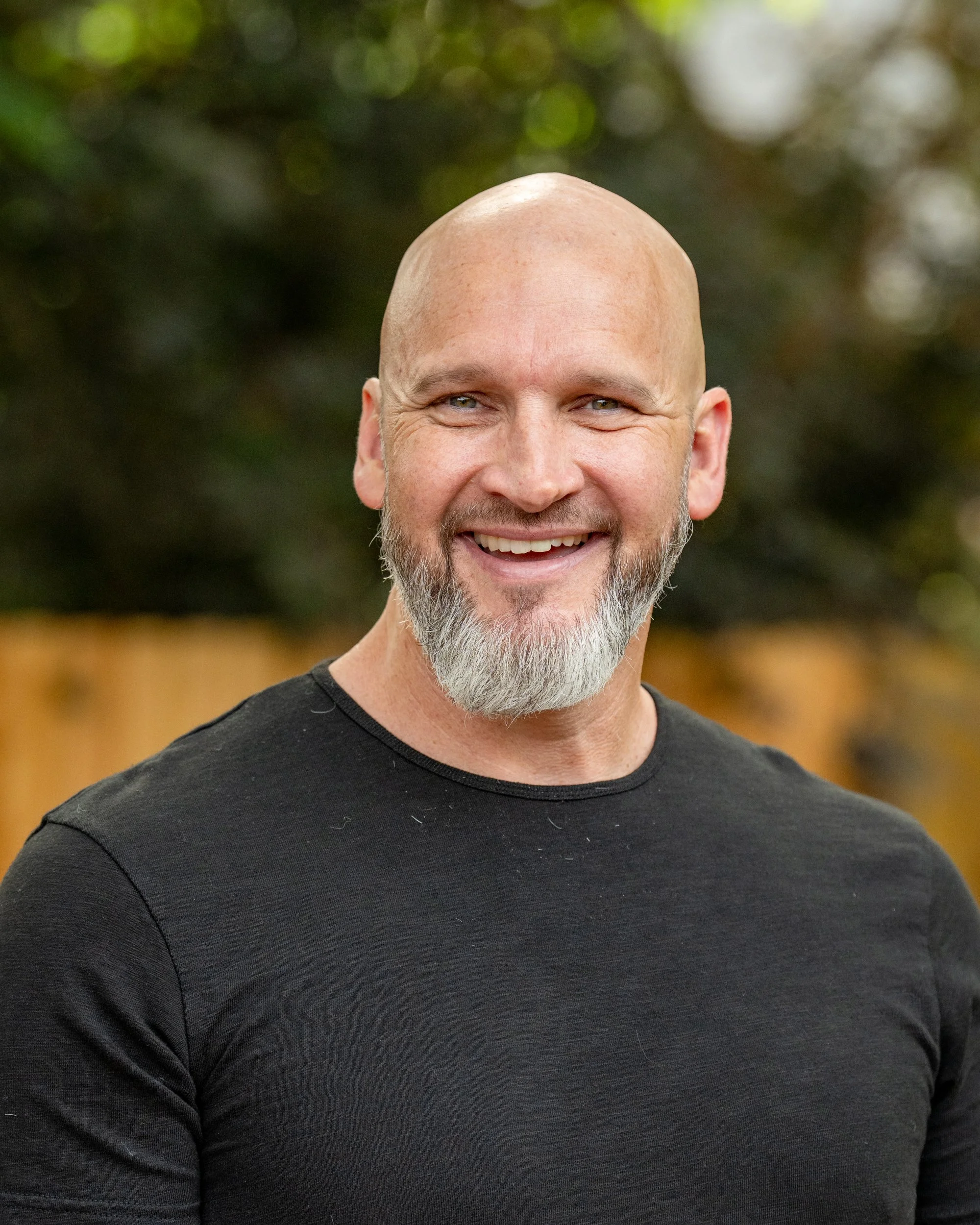
Nate Parsons is a life, leadership, legacy, and marriage coach and mentor with over 30 years of leadership experience spanning military, ministry, business, and personal development. He and his wife Noemi are the founders of S3 Leadership Solutions and On-Fire Marriage, dedicated to helping people across every life stage discover and fulfill their God-given purpose.
